Thread Lifts: Benefits, Risks, and What to Know Before Treatment
For people seeking an immediate lift to the cheeks and jawline without surgery, threads are often an early consideration. Absorbable threads engage and lift sagging tissue, producing an immediate contour change. Swelling, tightness, and asymmetry are possible, so it helps to know which threads will be used and who will plan their placement and direction.
How do threads lift the face?
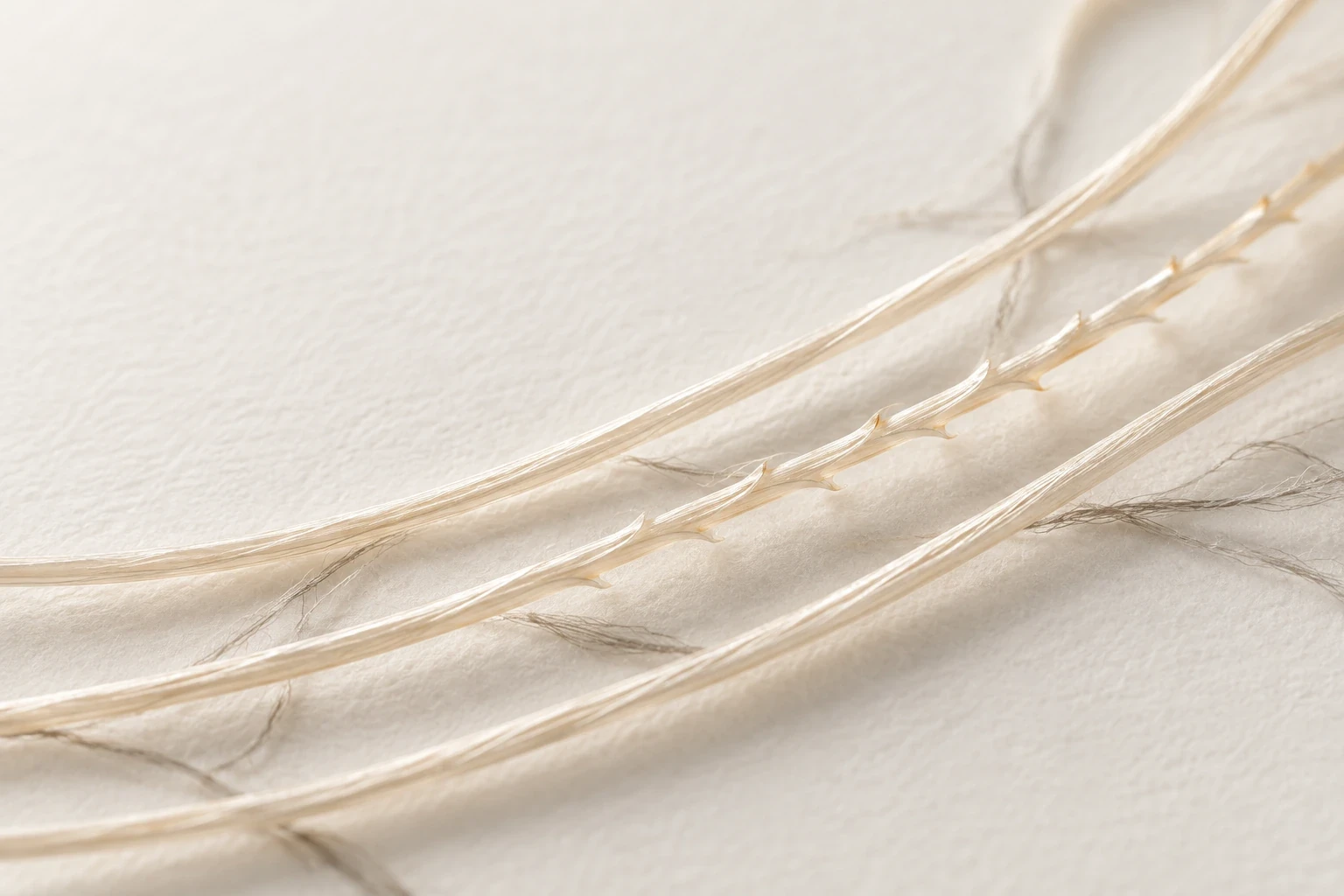
Lifting threads have small barbs that engage tissue beneath the skin, drawing the cheeks and mouth area upward and holding them in place. This is why contours can look different immediately afterward.
As the threads gradually dissolve, new collagen forms around them. The initial mechanical lift is followed by support from this collagen. Patients often ask whether the threads remain permanently. PDO dissolves over about 6 months and is excreted in urine, leaving collagen behind. Anatomical research emphasizes knowing the positions of vessels, nerves, fat compartments, and retaining ligaments for safe, natural-looking placement.[1]
What types of threads are available?
Threads may be absorbable or permanent, and smooth or barbed. Common categories differ as follows.
| Category | Features | Main purpose |
|---|---|---|
| Smooth absorbable threads | Fine, smooth threads placed closely together | Fine lines, texture, and mild firmness |
| Barbed absorbable threads | Barbs engage and lift tissue | Sagging cheeks, jawline, and jowls |
| Permanent threads | Remain in the body | Used cautiously because complication risks are higher |
PDO, or polydioxanone, is widely used for absorbable threads in Korea. Barb shape and number, along with placement direction, strongly affect traction and results.
How much lift is possible, and how long does it last?
The lift is clearest immediately, then settles into a more natural shape as swelling subsides. Duration depends on thread type and number, sagging, and skin thickness. With the DOUCE PDO threads used at our clinic, absorption takes around 6 months, while results are generally considered to last around 9–12 months or longer.
A meta-analysis of 26 studies found that satisfaction fell from 98% immediately after treatment to 88% at 6 months. The authors recommended explaining beforehand that the initial effect may not remain unchanged over time.[2]
What side effects can occur?
In the same analysis, swelling was most common at 35%, followed by dimpling at 10%, altered sensation at 6%, visible or palpable threads at 4%, infection at 2%, and thread extrusion at 2%. Absorbable threads had lower risks of altered sensation and extrusion than permanent threads. Patients over 50 had higher risks of dimpling and infection.[2]
Rare reports include thread migration and nerve or salivary-gland injury. Incorrect plane or direction contributes to many complications, so planning around facial anatomy can reduce them.[3] Direction also affects appearance: an unsuitable pull can make the lateral cheekbones look more prominent. We address visible dimples immediately with massage. DOUCE's T-shaped barbs engage a broader tissue area and tend to cause less foreign-body sensation.
Who is a suitable candidate?
Threads suit mild to moderate sagging when you want an immediate change in the cheeks, jowls, or jawline. We often consider DOUCE for a blurred jawline or for patients whose previous thread results did not last. We do not recommend it for people with enlarged salivary glands or very thick skin, because of the risk of gland injury. Severe sagging may be better suited to facelift surgery, which we explain at consultation. When hollows coexist, injections or collagen stimulators can complement the lift for a more natural result. To compare devices, see Which Lifting Treatment Suits Your Face?
How does Dong-An Joongsim Clinic perform thread lifting?
At Dong-An Joongsim Clinic, your doctor personally handles your consultation and treatment. They assess the direction of sagging, skin thickness, and salivary-gland position before choosing the thread plane and direction.
Thread lifting uses DOUCE PDO threads with patented T-shaped barbs. Conventional thread techniques can be difficult to control in direction and force, sometimes accentuating the lateral cheekbones. We adjust both with DOUCE to avoid that appearance. Dr. Chang-Hwan Cho has taught threads and fillers to doctors from Russia, Thailand, and Kazakhstan and was first author of a 2026 Journal of Cosmetic Dermatology paper comparing six collagen biostimulators. For sagging lateral cheeks and jowls when surgery feels like too much, we may also plan Outline Contour Lifting. This does not dissolve fat; it fills hollows and supports sagging contours, making it suitable when cheek hollowing is a concern. One patient who found Outline Contour Lifting on YouTube later recommended it to others. A RADIESSE patient, treated with the same CaHA ingredient, described natural filling without excessive volume.
What should you know before a thread lift?
Bruising, swelling, and awareness of the threads may last several days. For a week, avoid saunas, steam rooms, strenuous exercise, and firm rubbing or pressure. Duration and satisfaction vary with age, sagging, and lifestyle.
Thread lifts: common questions
How should I choose a thread-lift clinic in Apgujeong, Gangnam, Seoul?
Ask which threads are used and whether the doctor personally assesses your face and plans the plane and direction. At Dong-An Joongsim Clinic, your doctor consults and treats you directly.
Can a thread lift make the face uneven?
Dimpling was reported in around 10% of patients in the research. It can be managed with methods such as massage or injections; discuss it with your medical team.
How often can treatment be repeated?
We reassess as threads dissolve and the effect diminishes. DOUCE results are generally considered to last around 9–12 months or longer, with individual variation.
What determines the cost?
Cost depends on thread type and number, treatment areas, and additional procedures. Your doctor determines what treatment you need before we explain the cost.
References
- Hong GW et al., “Anatomical Considerations for Thread Lifting Procedure”, Journal of Cosmetic Dermatology, 2025. https://doi.org/10.1111/jocd.16618
- Niu Z et al., “A Meta-Analysis and Systematic Review of the Incidences of Complications Following Facial Thread-Lifting”, Aesthetic Plastic Surgery, 2021. https://doi.org/10.1007/s00266-021-02256-w
- Yi KH et al., “Facial Thread Lifting Complications”, Journal of Cosmetic Dermatology, 2025. https://doi.org/10.1111/jocd.16745